
Covered
Stitching failure, loose or broken hardware, frame failure, zip failure, turn-lock spring failure. Free repair, return shipping both ways, five years from delivery.
Quote your punch mark
Complimentary delivery over US$180
Five-year stitching warranty
Cut to order at one bench
Since 2019 · Hong Kong SAR
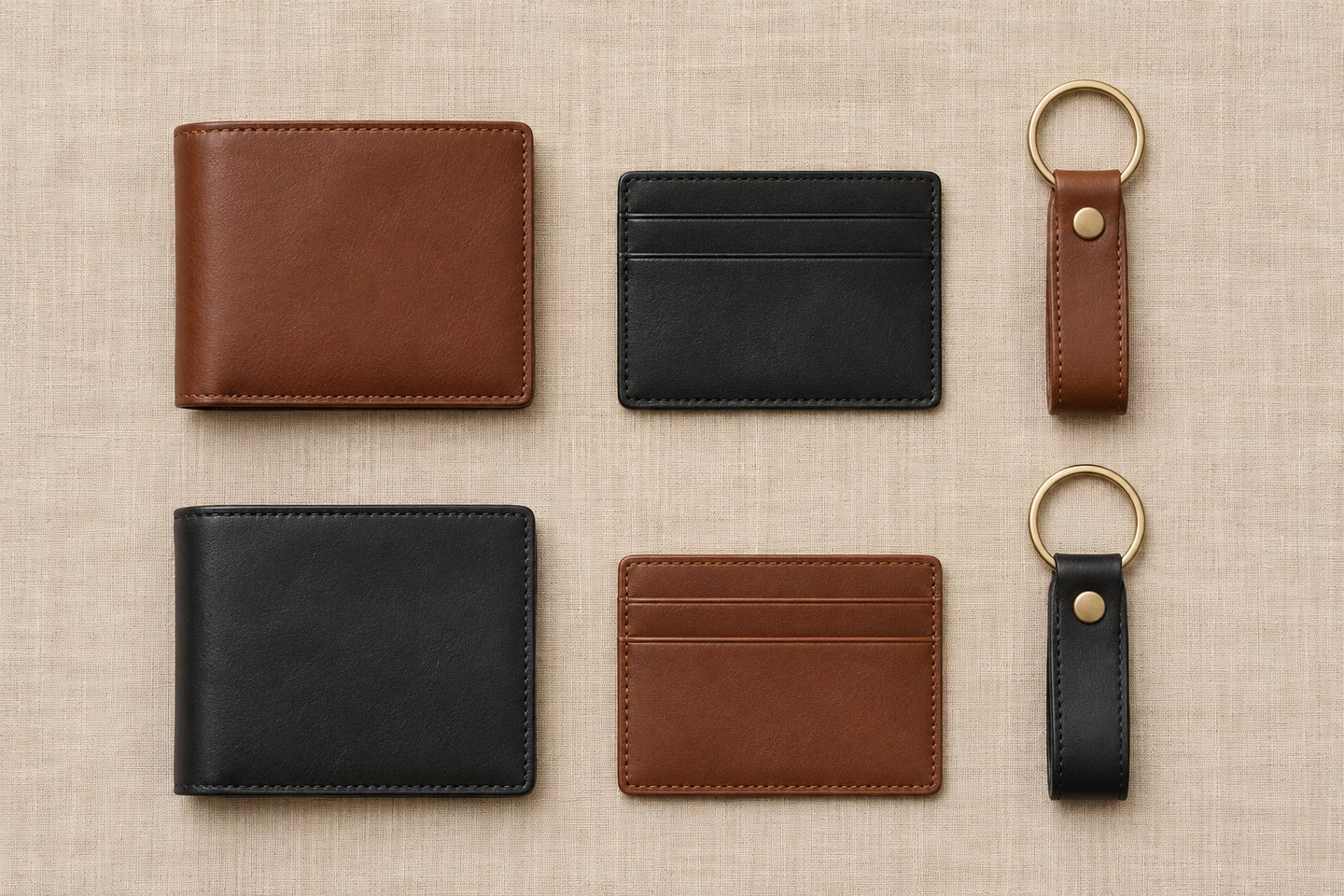
RUIZE ATELIER is a small leather workshop operating from Hong Kong. We make six pieces, we make them slowly, and we make them the same way every time.
Why we are small
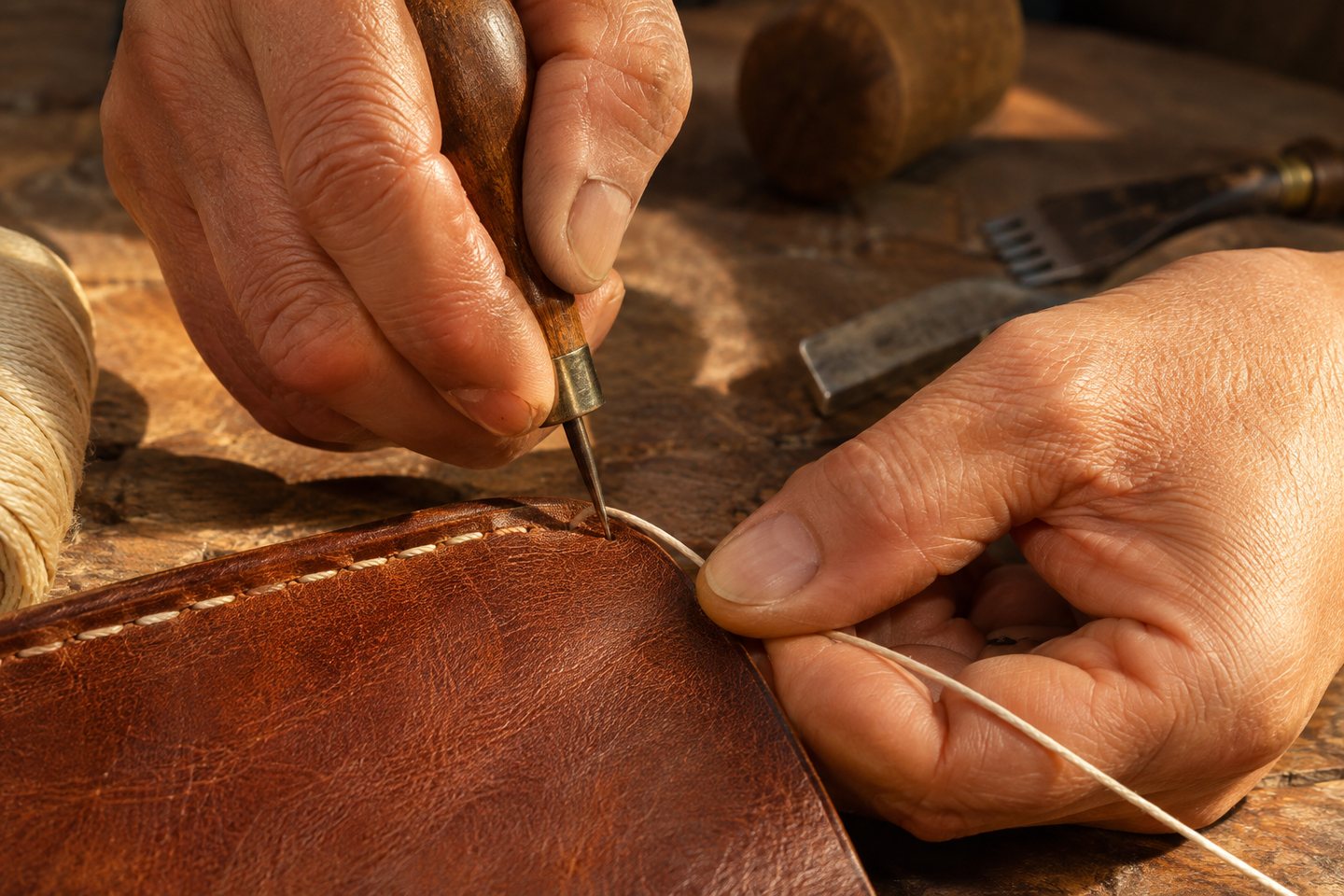
We started in 2019 with one bench, one head knife and a stack of vegetable-tanned hides that were, frankly, too good for a beginner. The first twenty bags were bad. The twenty-first was not, and we have been refining the same six patterns ever since.
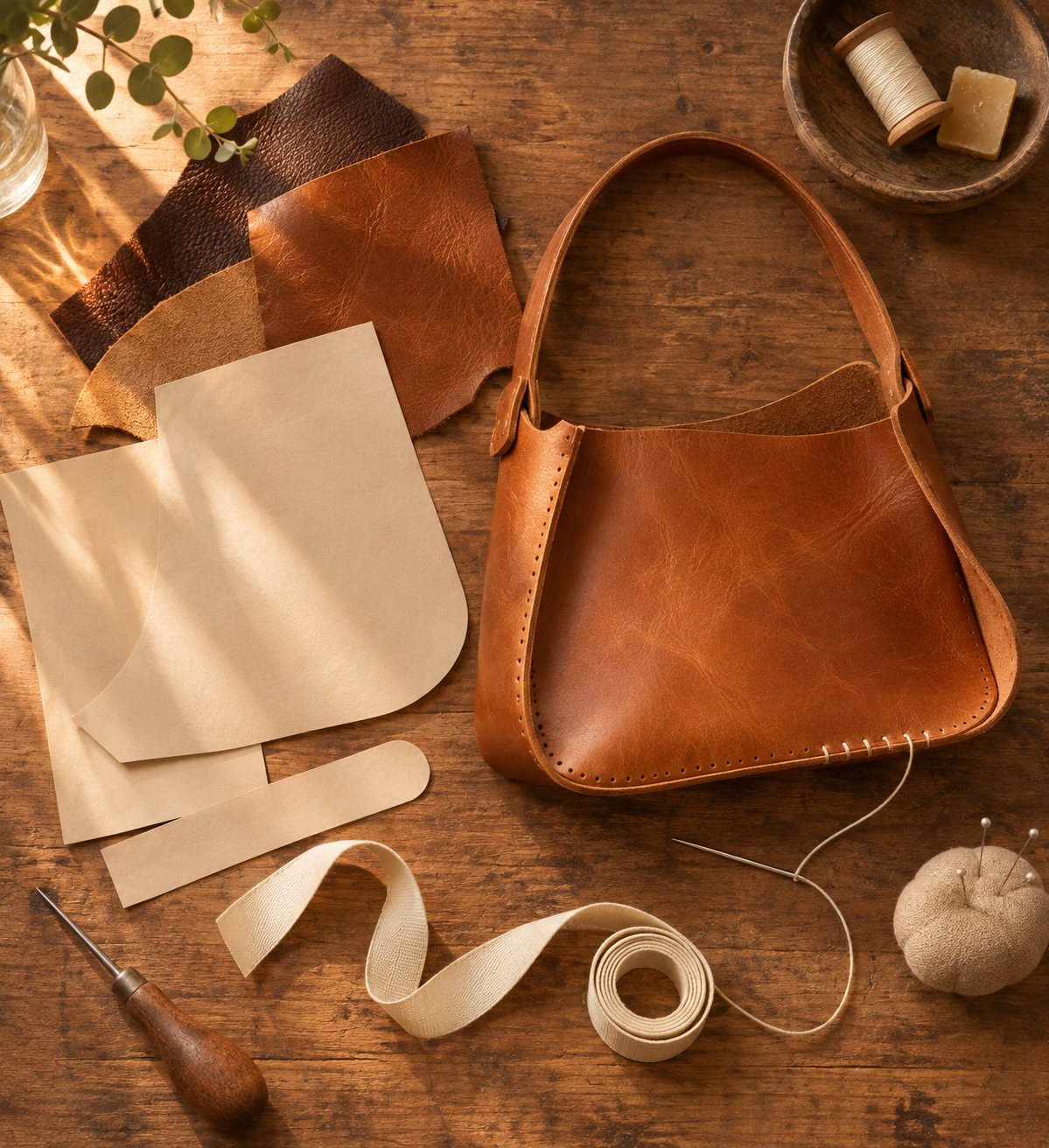
We have never added a hydraulic press, a skiving machine or a clicker die. Every panel is cut by hand against a card pattern, which is slower and less uniform and the reason each piece carries its own grain map.
Material
The word is used loosely in the trade. Here is the version we hold ourselves to.
Full-grain means the top layer of the hide is left intact — the part with the pores, the scars and the stretch marks. It is not sanded, not corrected, not embossed with a fake grain plate.
Most leather goods on a shelf are corrected-grain: the surface is sanded flat to remove imperfections, then stamped with a uniform pattern and sprayed with pigment. It looks consistent and it stays consistent, because there is nothing left in it to change.
Full-grain does the opposite. It darkens where you hold it, lightens where it flexes, and keeps a record of the last five years. If a hide has a scar across the flank, our cutter works around it — the scar goes in the scrap bin, not under a coat of paint.
Our hides are pit-tanned with tree bark over roughly thirty days. Chrome tanning takes a day and produces a softer, more uniform, more disposable leather. Vegetable tanning produces a firmer hide that takes a burnished edge beautifully and develops patina instead of cracking.
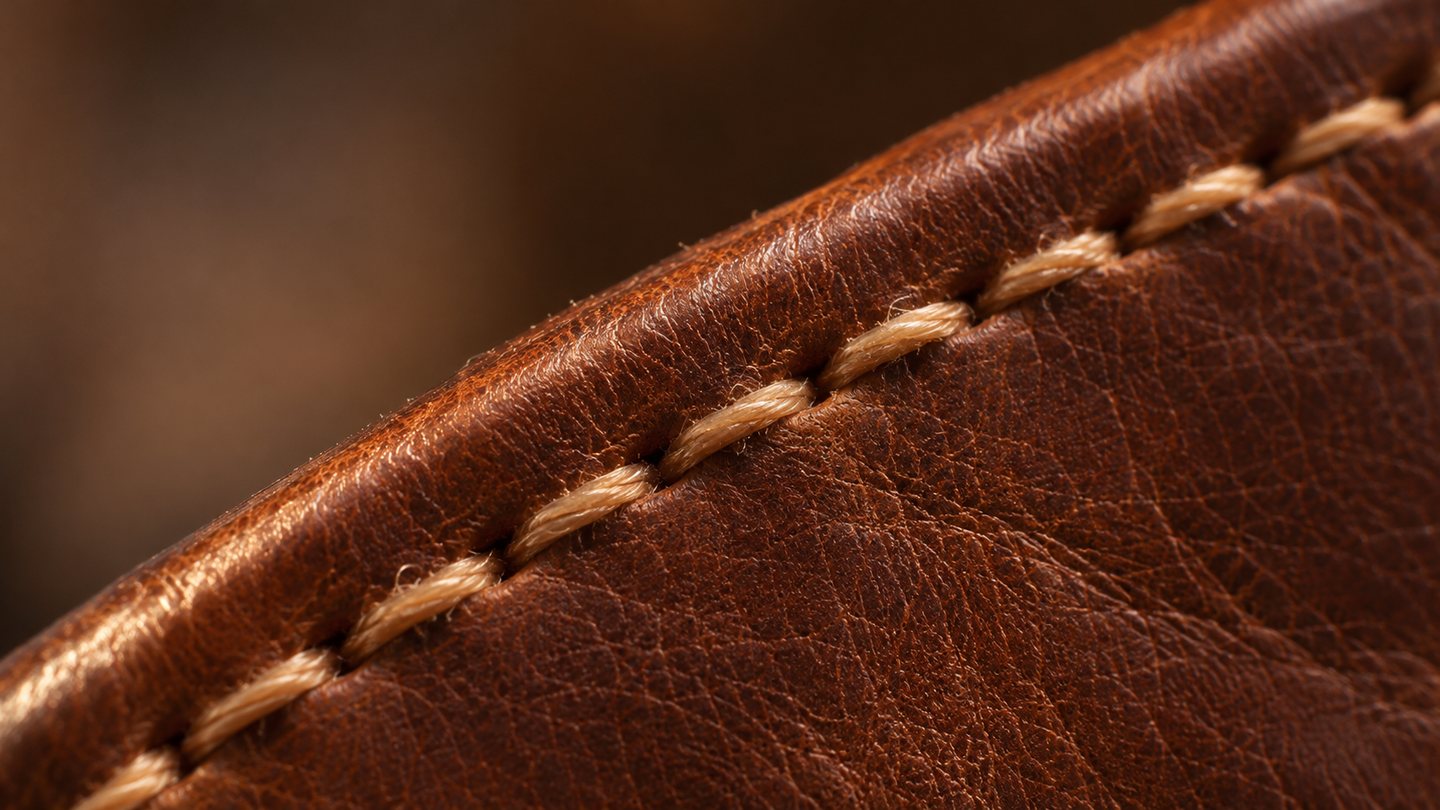
We stitch with a 0.6 mm waxed poly-cotton at a 3.5 to 4 mm pitch, two needles, one saddle. Machine lock stitch fails by unravelling from a single broken point; a saddle stitch fails only where it is cut, and the neighbouring stitches hold.
The bench, in numbers
Care & repairs
What we fix free, what we fix for cost, and what is honestly your problem.
Covered
Stitching failure, loose or broken hardware, frame failure, zip failure, turn-lock spring failure. Free repair, return shipping both ways, five years from delivery.
Quote your punch mark
At cost
Replacement straps, new belt buckles, re-edging worn panels, re-waxing a Ridge backpack. We charge parts and labour, no margin.
Typically US$15–40
Not covered
Scuffs, darkening, softening, water staining, cuts, ink, mould, or damage from a bag left soaking wet in the sun. These are wear, not faults.
We will still advise you
How to send it
Write to CHEN202601011@outlook.com with your punch mark and two photographs. We reply with a repair reference and a shipping address within two working days.
Mon – Fri, 09:30 – 18:30 (HKT)
Visit or write
There is no call centre. Enquiries land in a shared inbox read by the two people who run the bench, usually before the first coffee.